
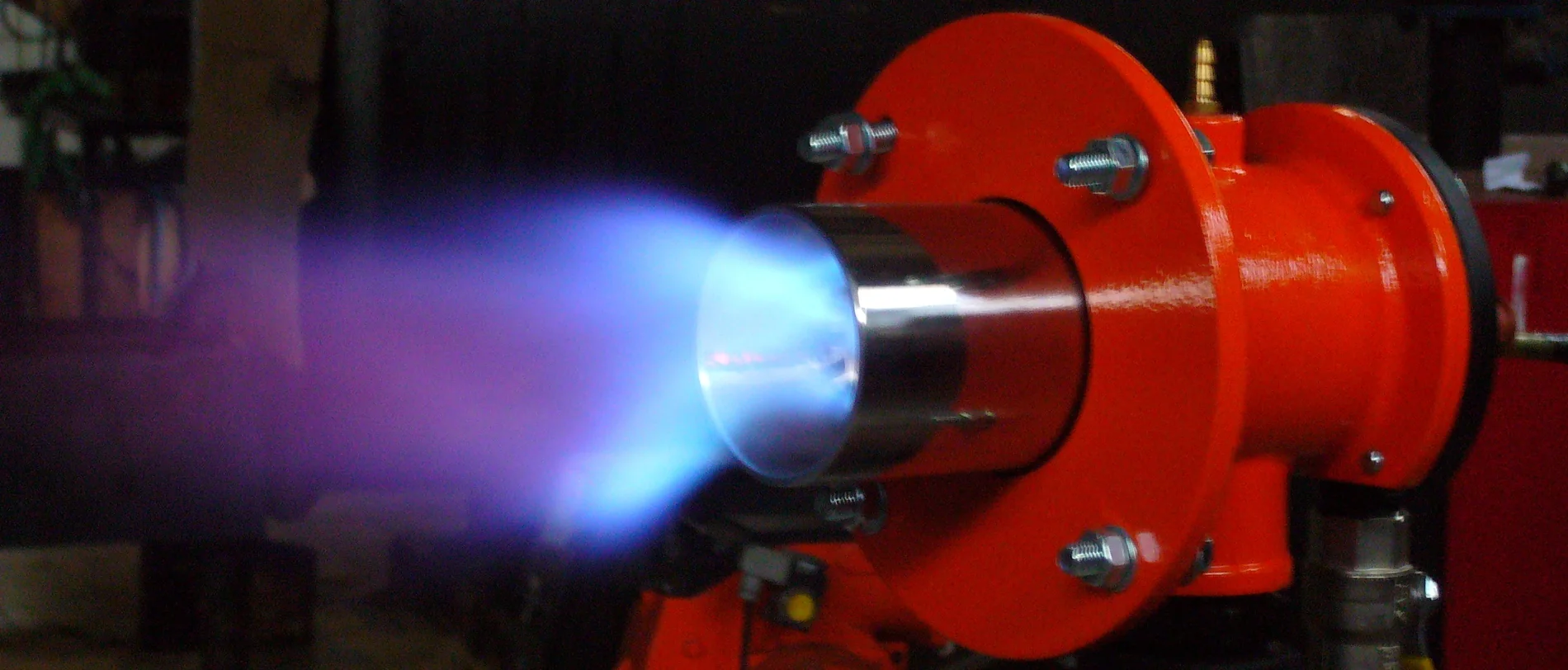
EcoStar burners — selection, installation, commissioning and service.
We supply and service EcoStar burners throughout Poland — we have worked with the manufacturer for thirteen years. Gas, oil, dual-fuel, biogas and waste-oil burners — for boilers, grain dryers, process furnaces and air heaters.
This is the most specialised part of what we do and the part that sets us apart from a typical installation company. The burner determines the efficiency of the whole combustion system: how much fuel the plant burns, whether the process stays stable and whether the installation meets emission requirements. Replacing the burner alone is often cheaper and more effective than replacing the boiler.
Why EcoStar
We have worked with EcoStar (Ecostar Combustion Systems) for thirteen years and supply its burners throughout Poland. This is not a random catalogue choice: the manufacturer has built burners for several decades and its range covers both small monobloc units and large industrial burners — according to the manufacturer's catalogue, from tens of kilowatts to tens of megawatts on gas, liquid fuel and dual-fuel systems.
For you that means three practical things: one source across the whole capacity range — from a boiler burner in a plant room to a process burner in a furnace; access to spare parts without hunting the second-hand market; and service from the same supplier who selected and commissioned the burner, which matters more with combustion equipment than with any other system on site.
The EcoStar series we select from
The main burner families from the manufacturer's catalogue with their typical application. The capacity ranges come from EcoStar material — we always match the specific model to the parameters of your boiler or process equipment.
| Series | Fuel | Capacity | Typical application |
|---|---|---|---|
| ECO | natural gas, LPG, light and heavy oil, biogas, special fuels | 1.9–40.8 MW | Hot-water, steam and thermal-oil boilers, dryers, hot-air generators, asphalt plants |
| DSE | natural gas, LPG, light and heavy oil, biogas | 9–47 MW | Large hot-water, steam and thermal-oil boilers — duoblock arrangement |
| DIB | natural gas, LPG, light and heavy oil, biogas | 3.2–24 MW | Steam and thermal-oil boilers, plant start-up, hot-air generators |
| MIB / GIB | as above plus pulverised coal (MIB) | 3.2–24 MW | Hot-water, steam and thermal-oil boilers, drying processes, dryers in asphalt plants |
| FPB — process burners | natural gas, LPG, light and heavy oil | 4–5,800 kW | Heat-treatment furnaces, metal crucibles, ceramic dryers and kilns, food drying |
| FUSE — high-velocity burners | gas | 12–6,000 kW | Forging and billet-heating processes |
| ECO WO | waste oil and light oil | from approx. 80 kW (e.g. ECO WO-150: 93–147 kW) | Using spent oil as fuel — workshops and plants where such oil arises |
The ranges above come from manufacturer material and may change as the offer is updated. We send data sheets and technical documentation for the chosen series on request — write to us.
The types of burner we work with
Fuel 01
Gas burners
Natural gas and propane. The cleanest combustion and the simplest control — the default solution wherever there is a gas connection.
- Control
- single-, two-stage, modulating
- Use
- boilers, processes
Fuel 02
Oil burners
Heating oil where there is no gas. They need careful commissioning and regular service of the nozzle and electrodes.
- Control
- single-, two-stage
- Service
- seasonal
Fuel 03
Dual-fuel gas and oil burners
Two fuels in one unit — switching to oil during a gas supply interruption or on a more expensive tariff.
- Benefit
- continuity of operation
- Use
- plants, heat plants
Fuel 04
Waste-oil burners
Using spent oil as fuel in an installation designed for it. A solution for workshops and plants where such oil arises.
- Requires
- fuel preparation
- Note
- formal requirements
Fuel 05
Biogas burners
Firing gas from digesters and fermentation plants. The key is matching the burner to a variable composition and calorific value.
- Challenge
- variable gas composition
- Use
- biogas plants
Fuel 06
Process burners
Heating air and media within a technological process: dryers, furnaces, production lines, paint shops.
- Requirement
- stable temperature
- Operation
- continuous
Burners we supply
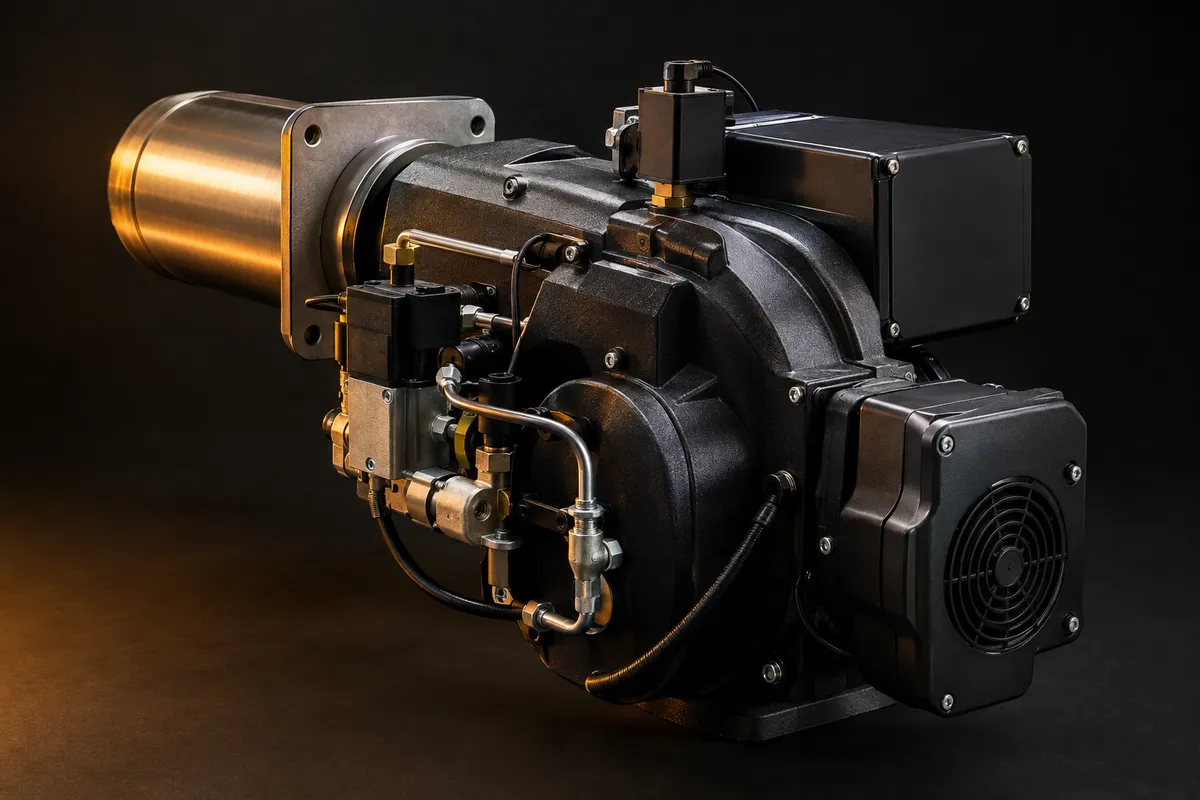
Photographs of ECO series equipment in gas, oil and dual-fuel versions — from small burners to industrial units. The specific model is matched to your boiler or process equipment, so treat this gallery as an overview of the designs rather than a closed list.
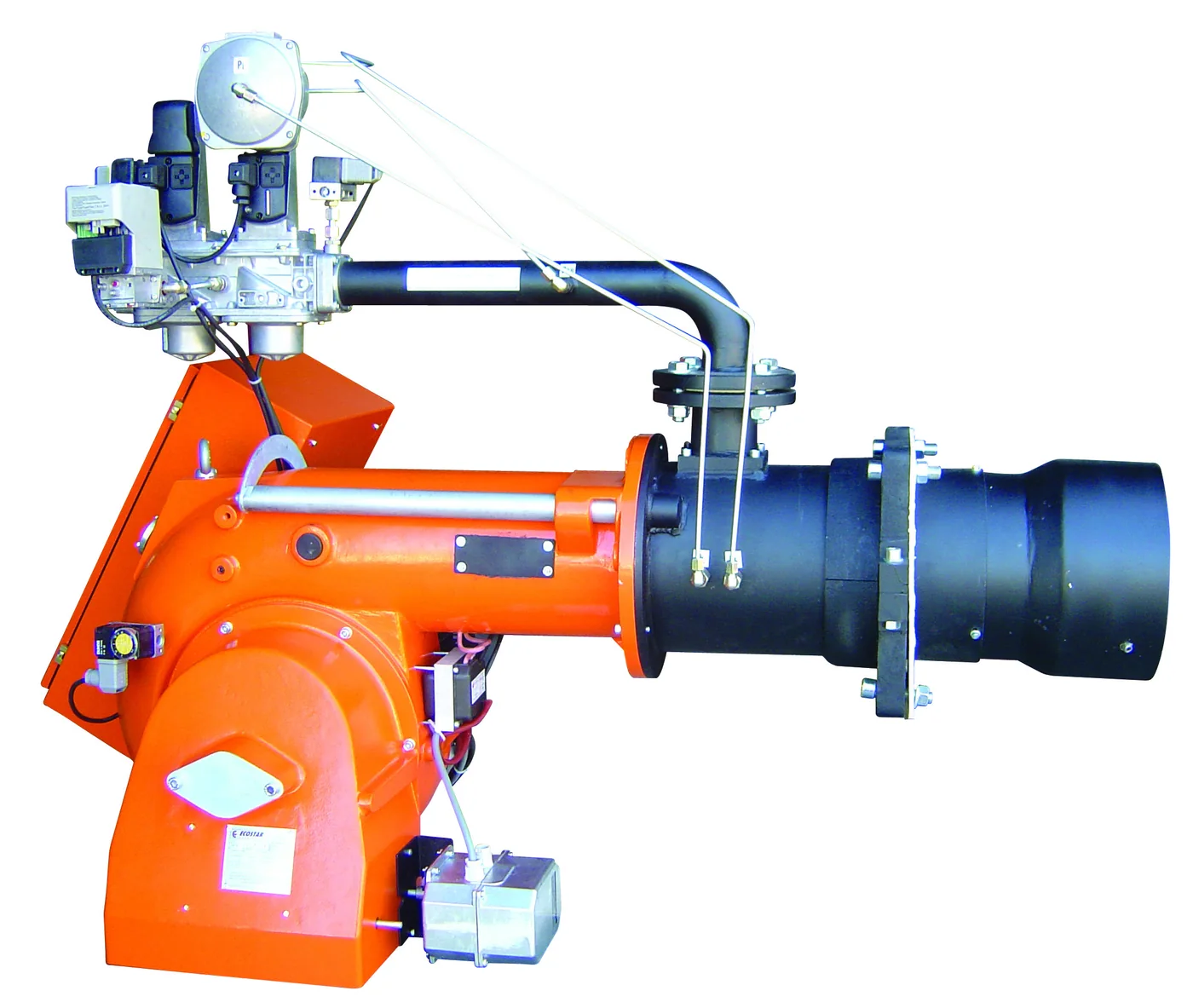
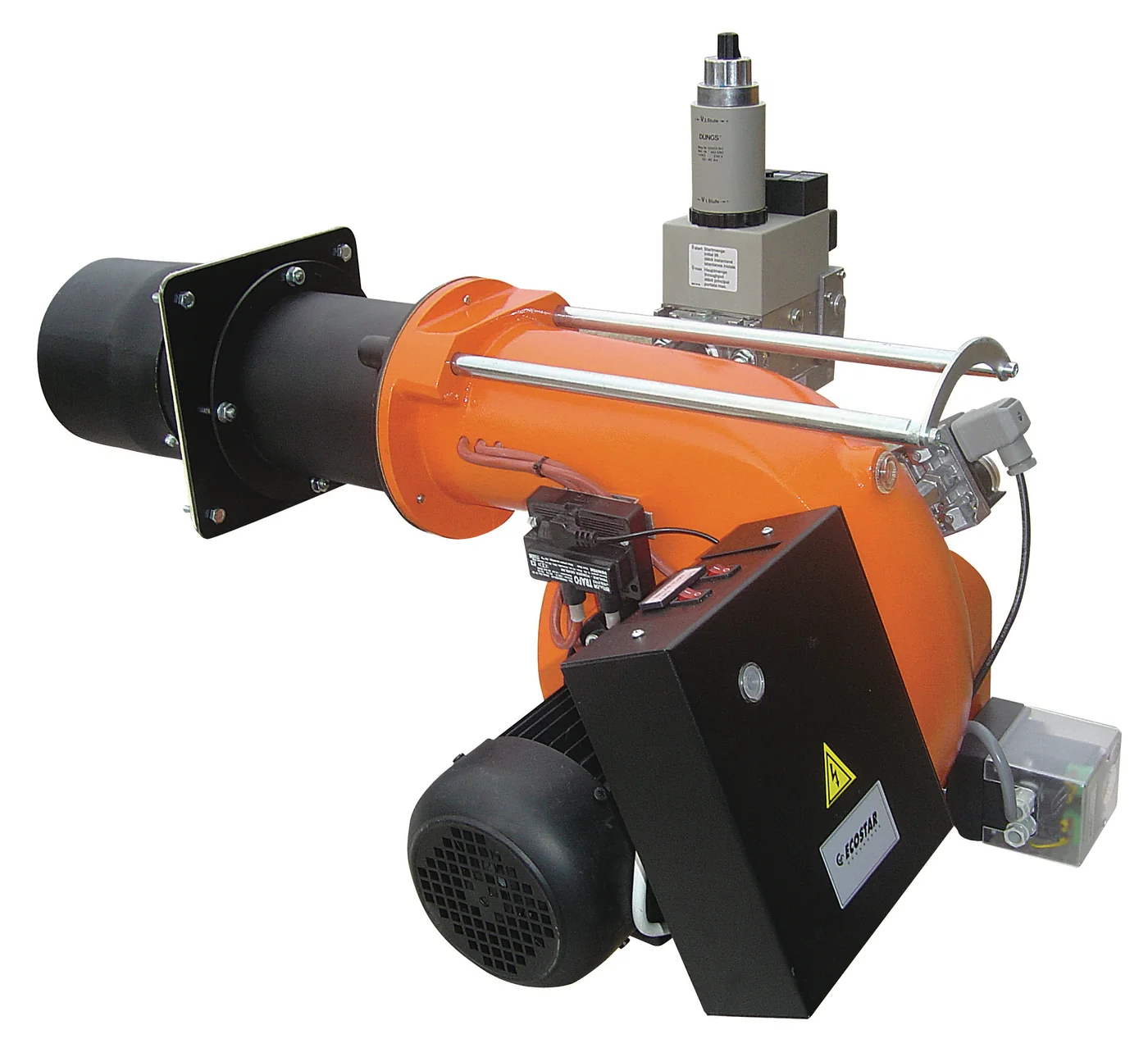
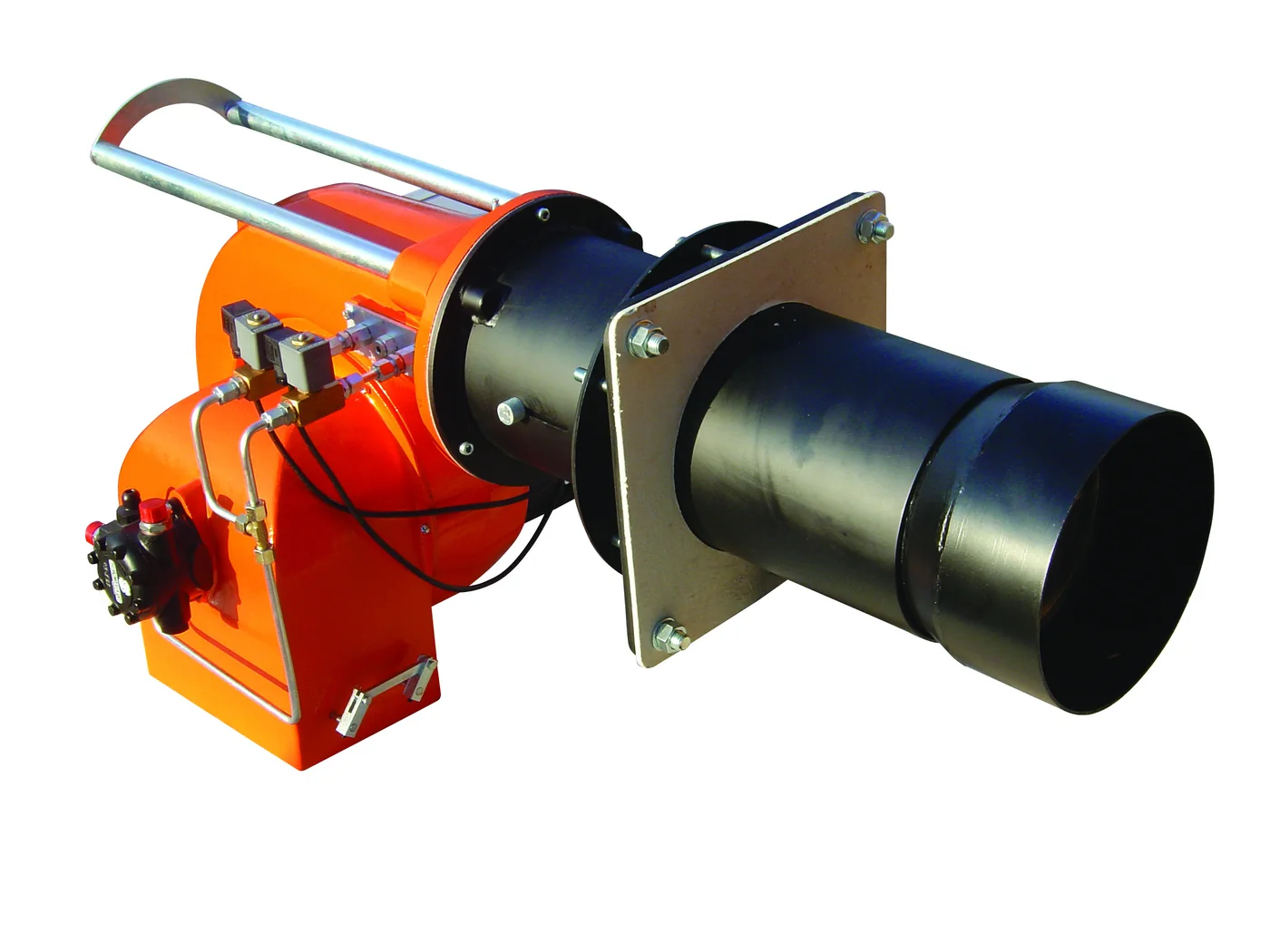
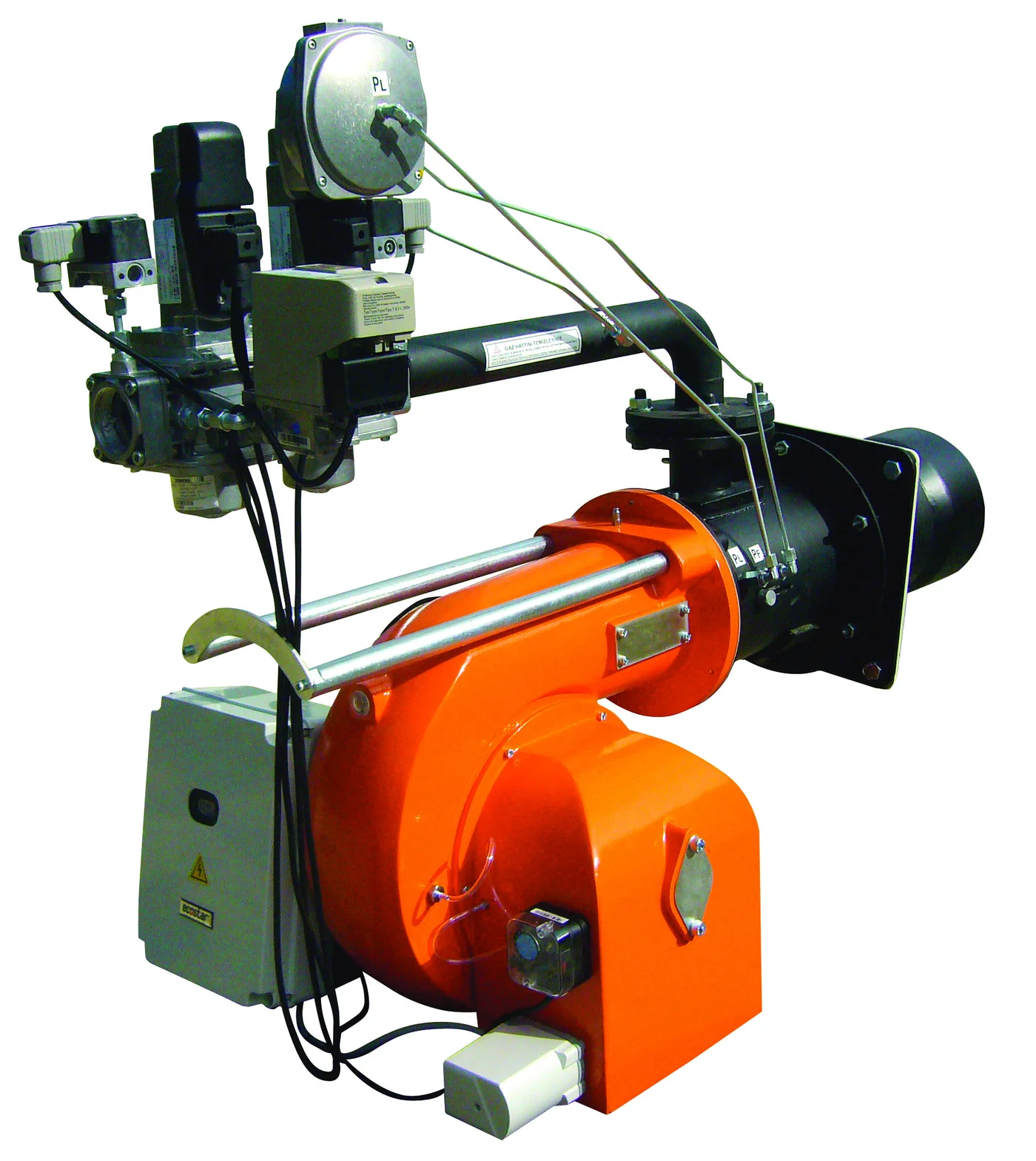
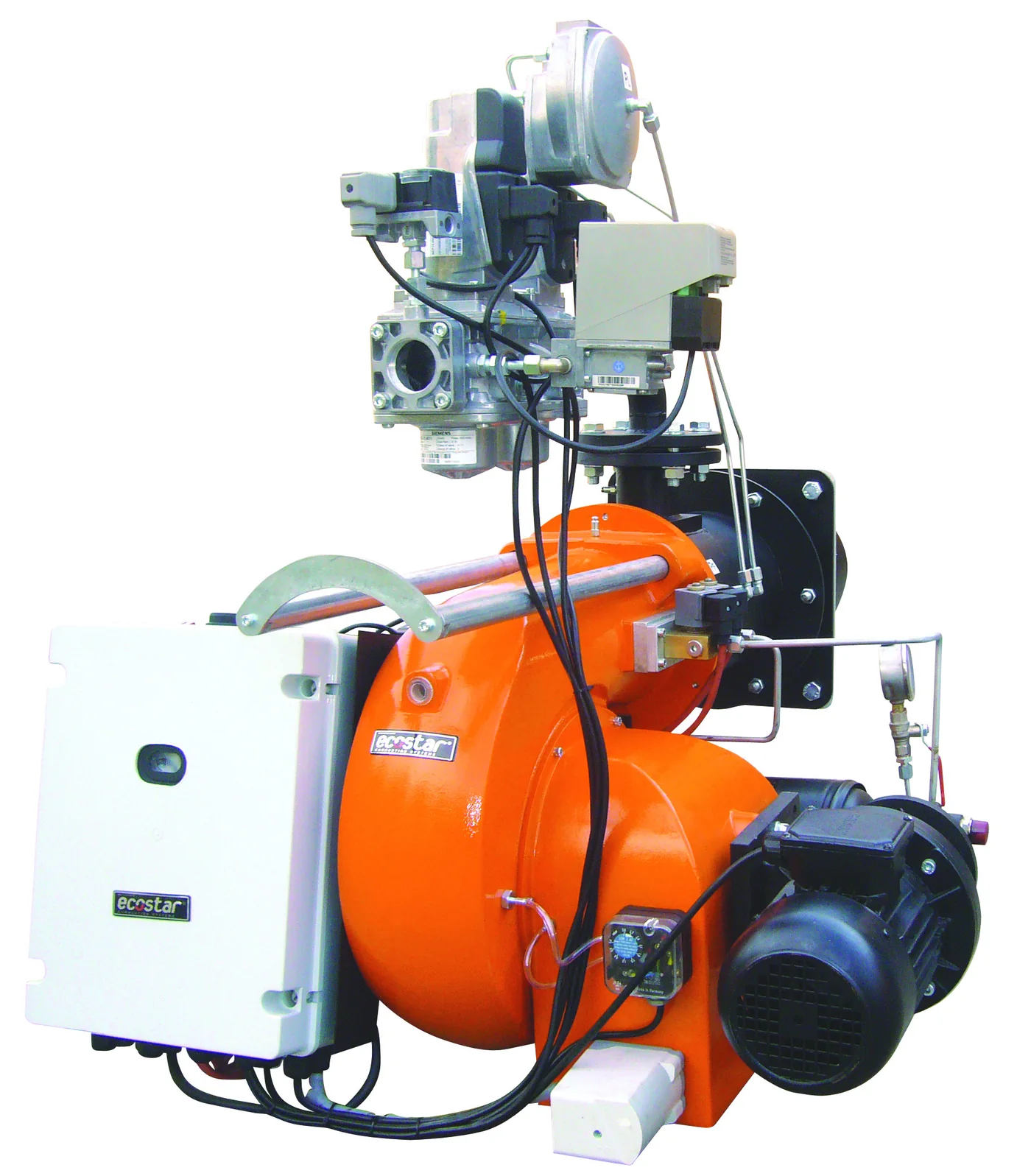
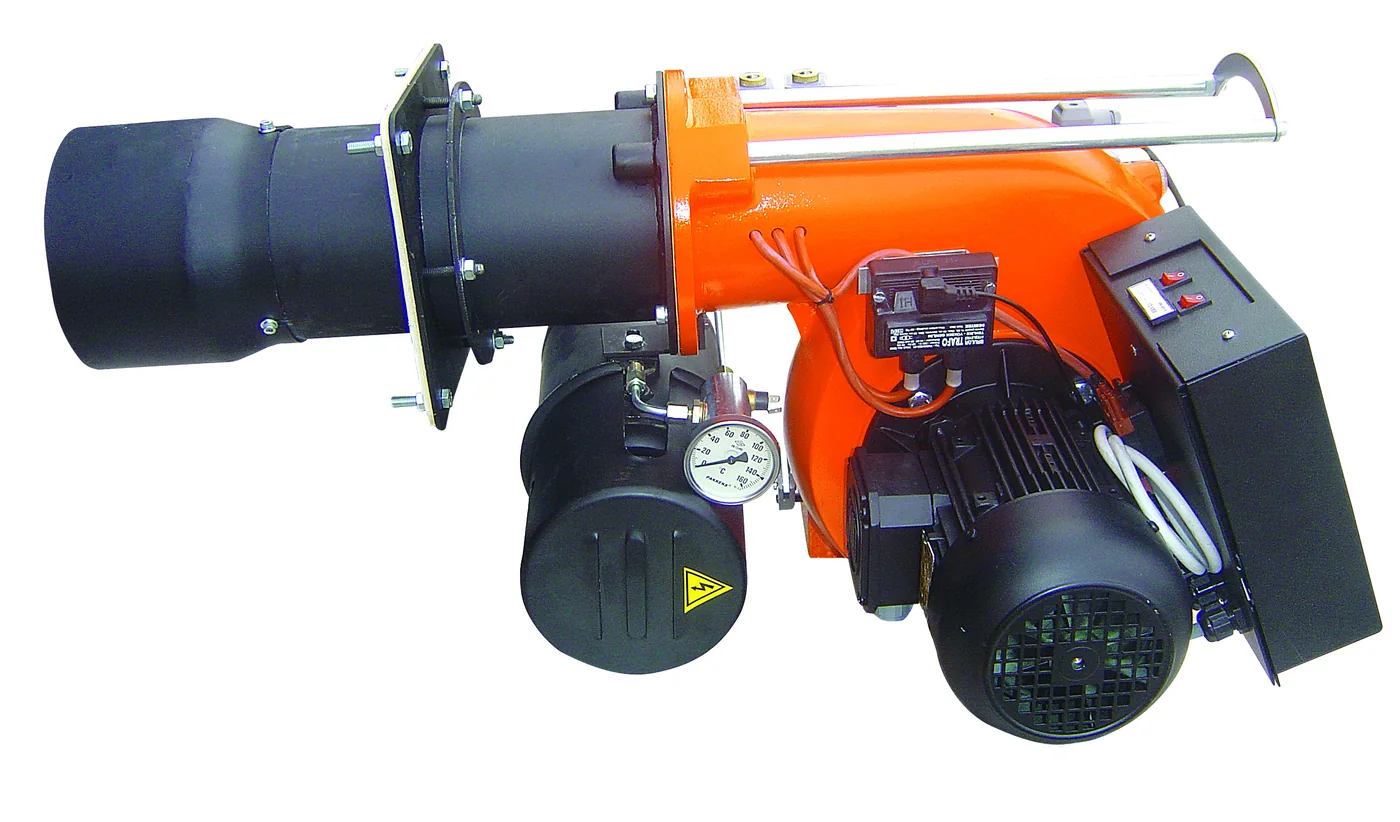
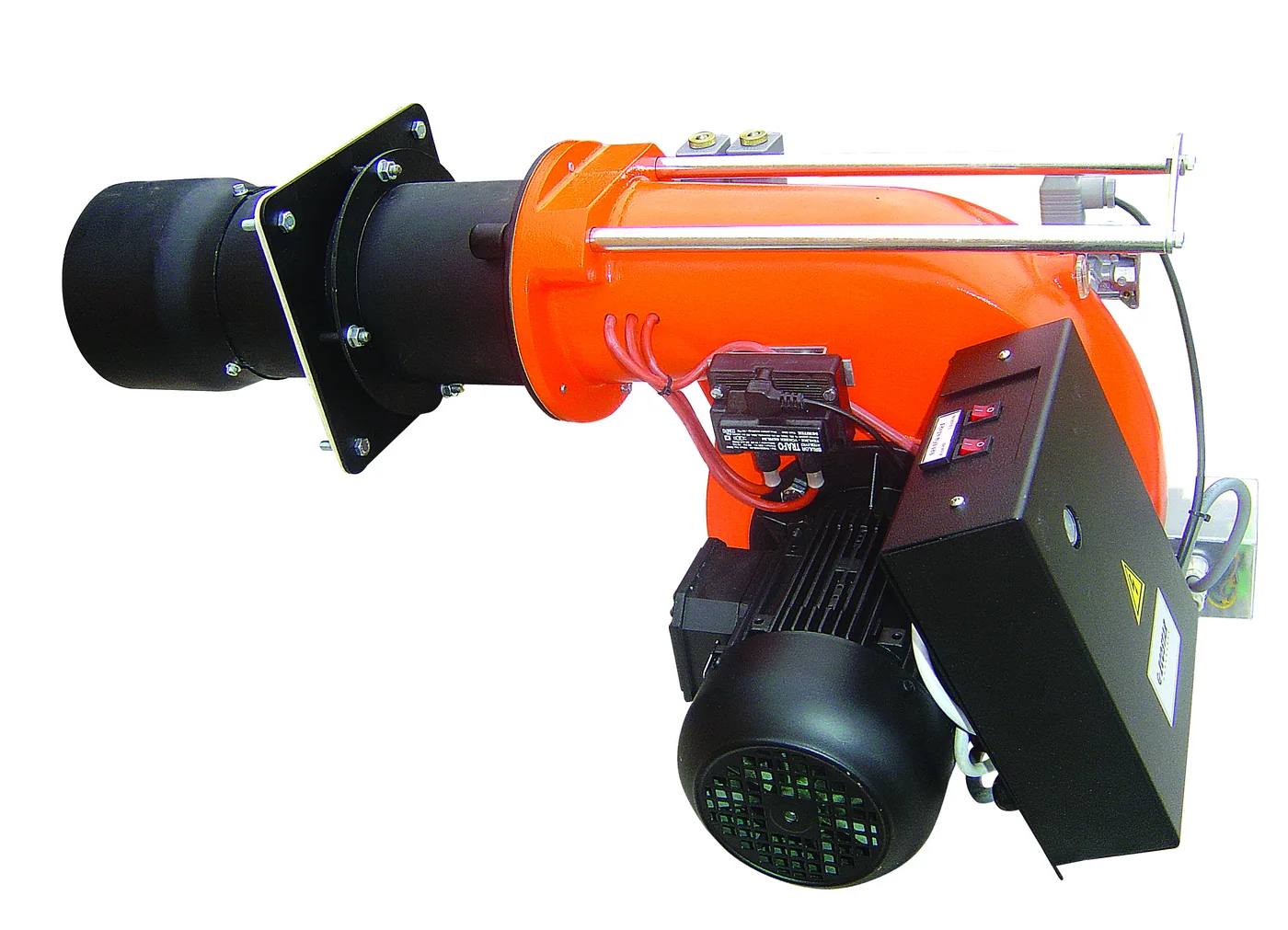
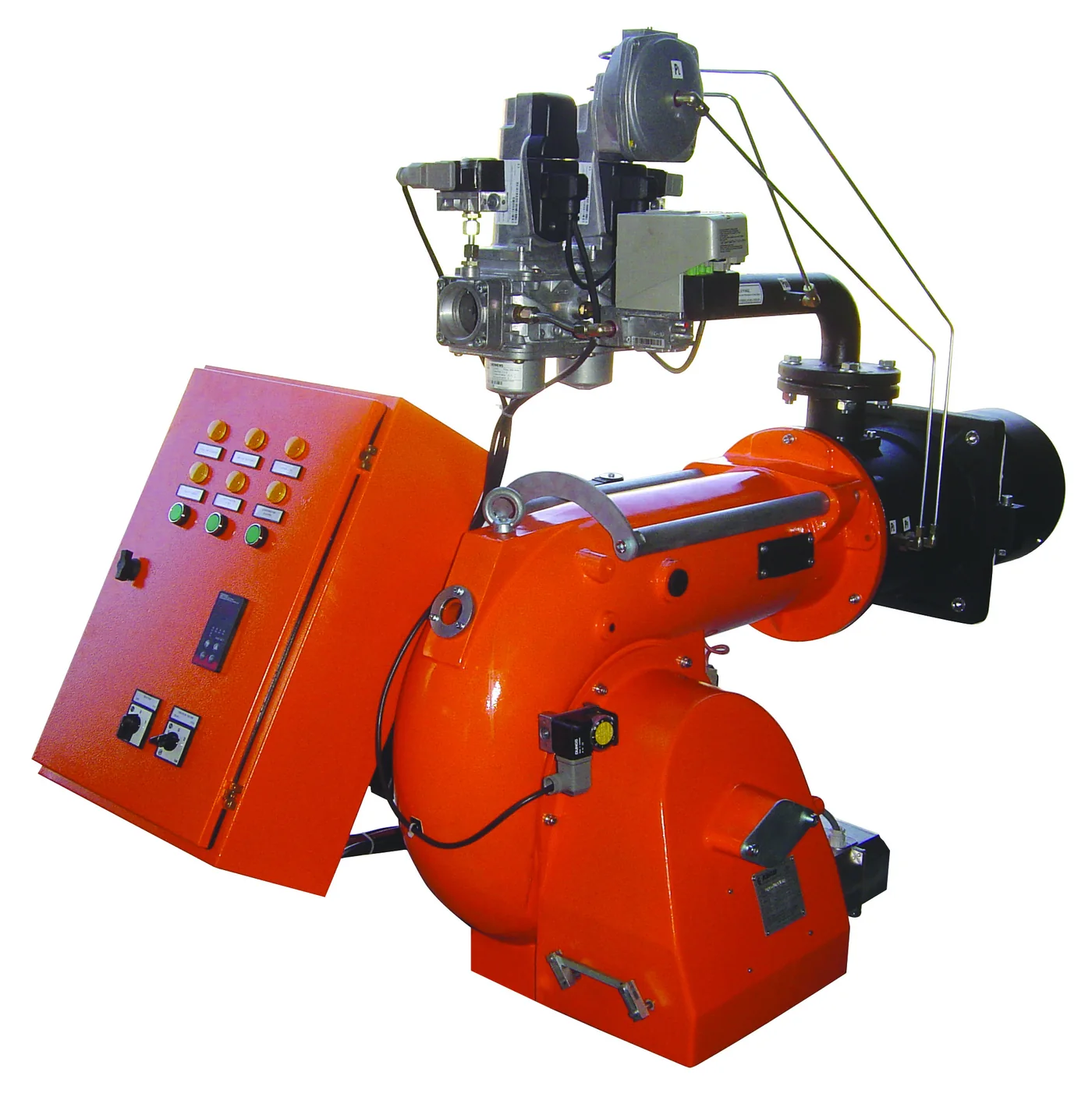
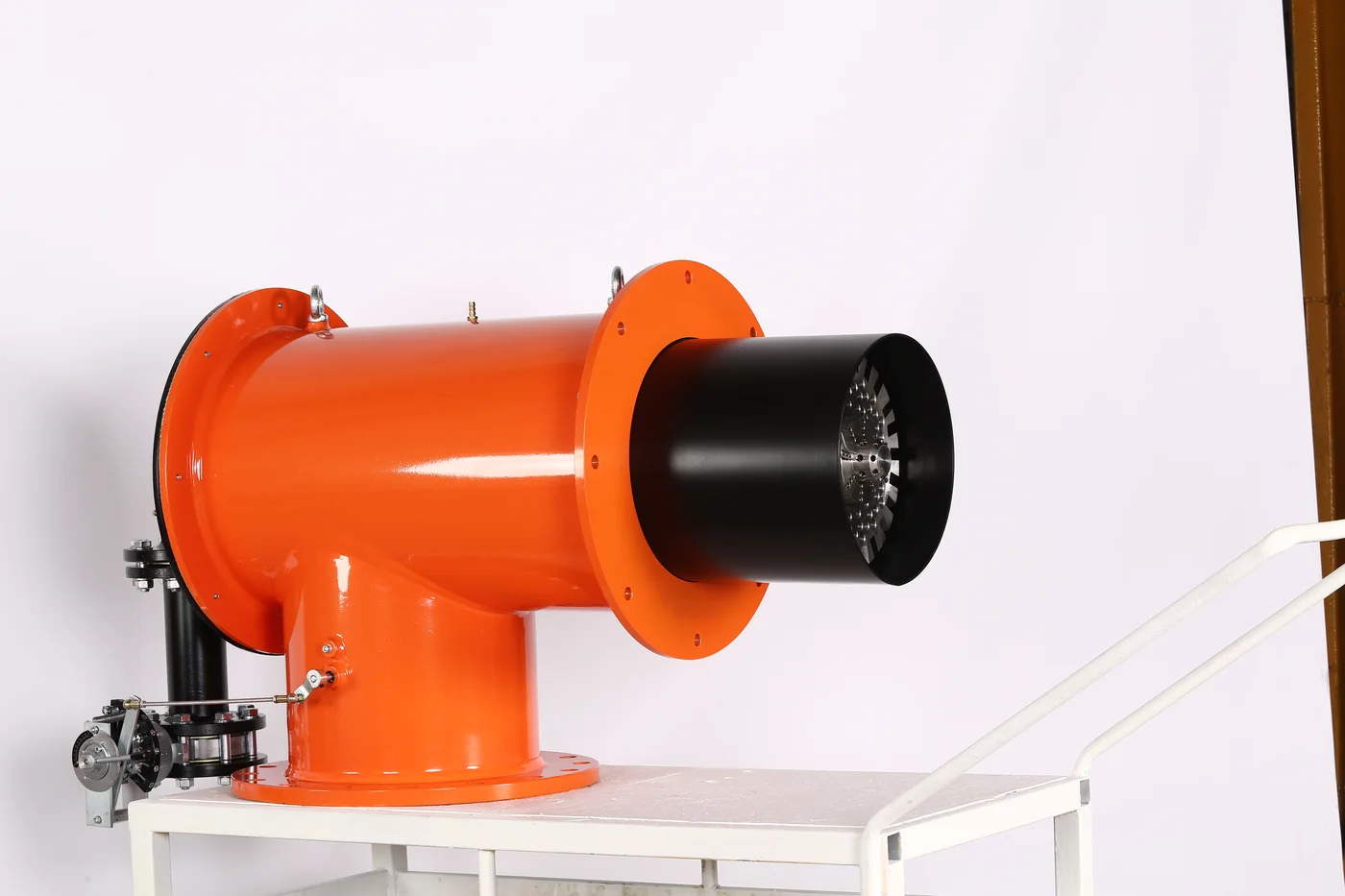
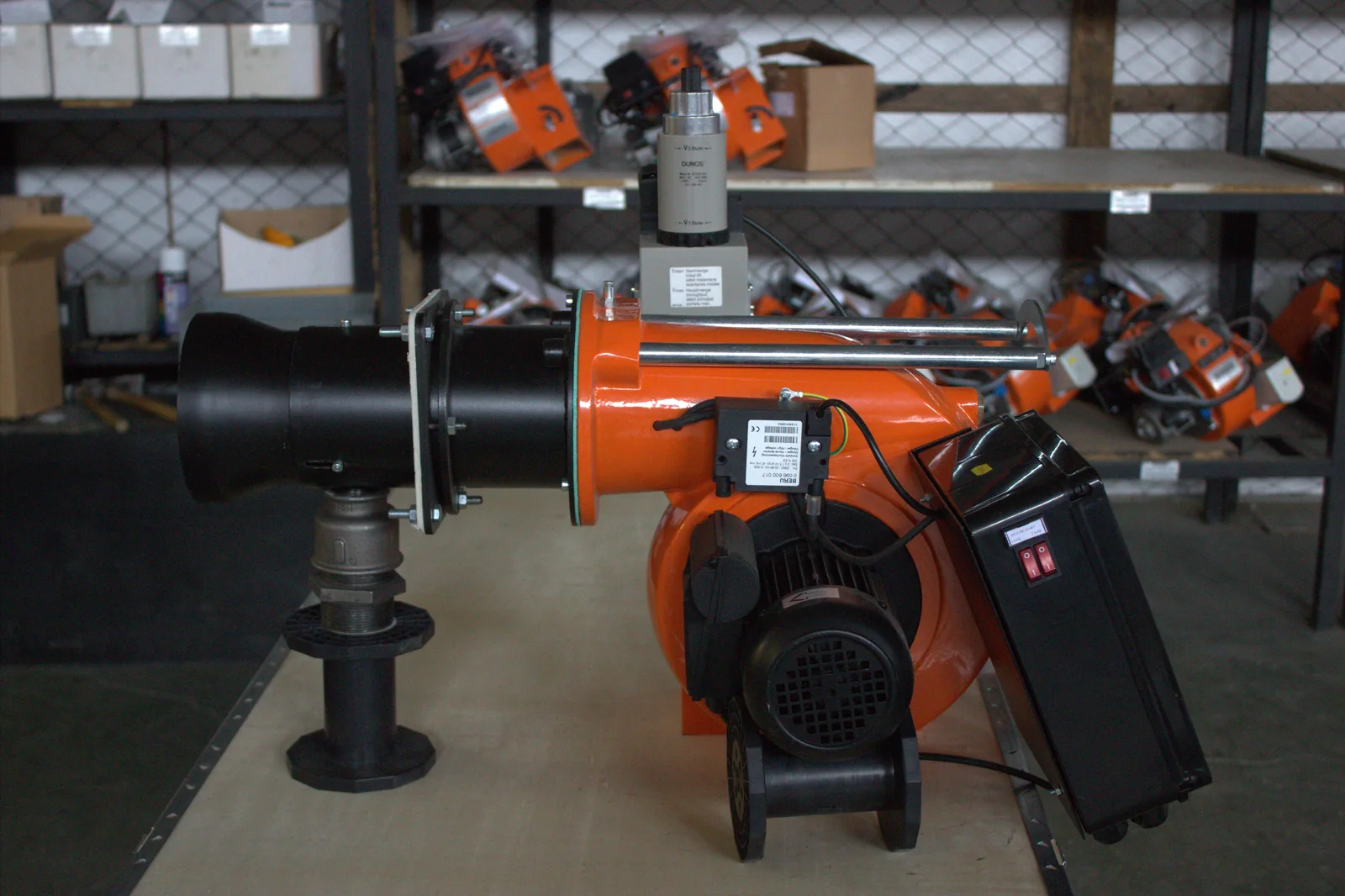
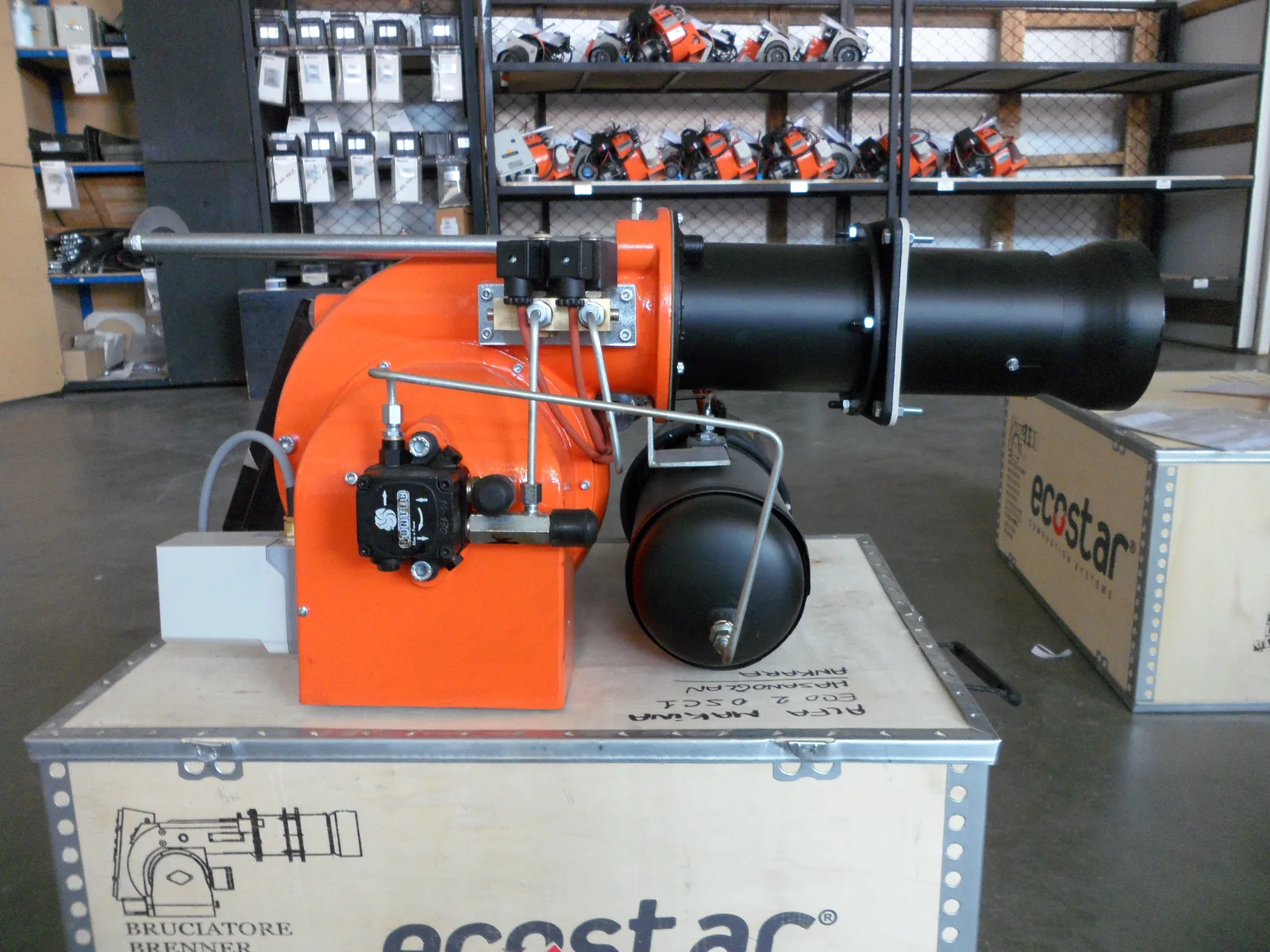
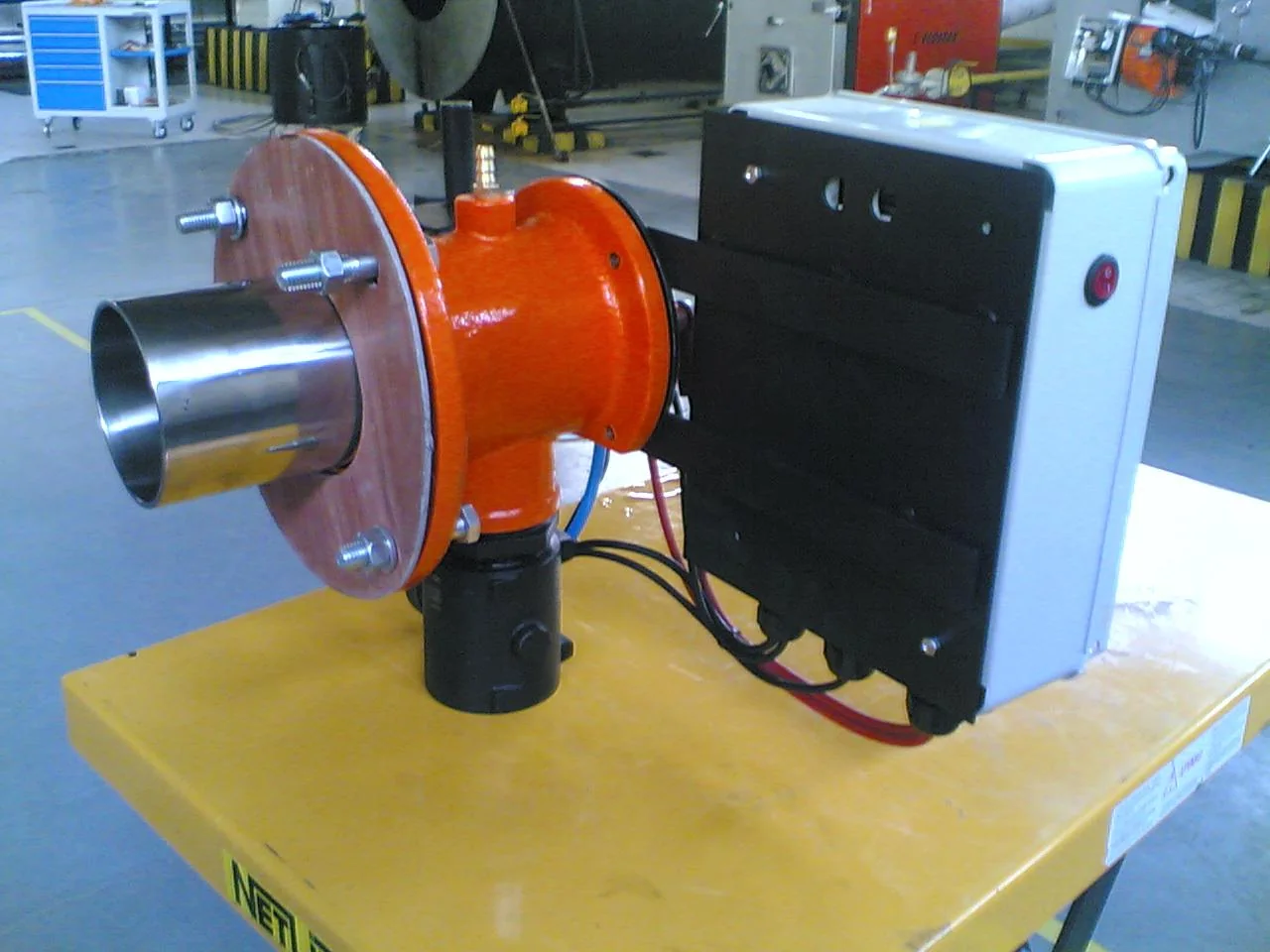
The product photographs show equipment from the Ecostar Combustion Systems catalogue. Series designations are given as stated by the manufacturer.
Burners at work
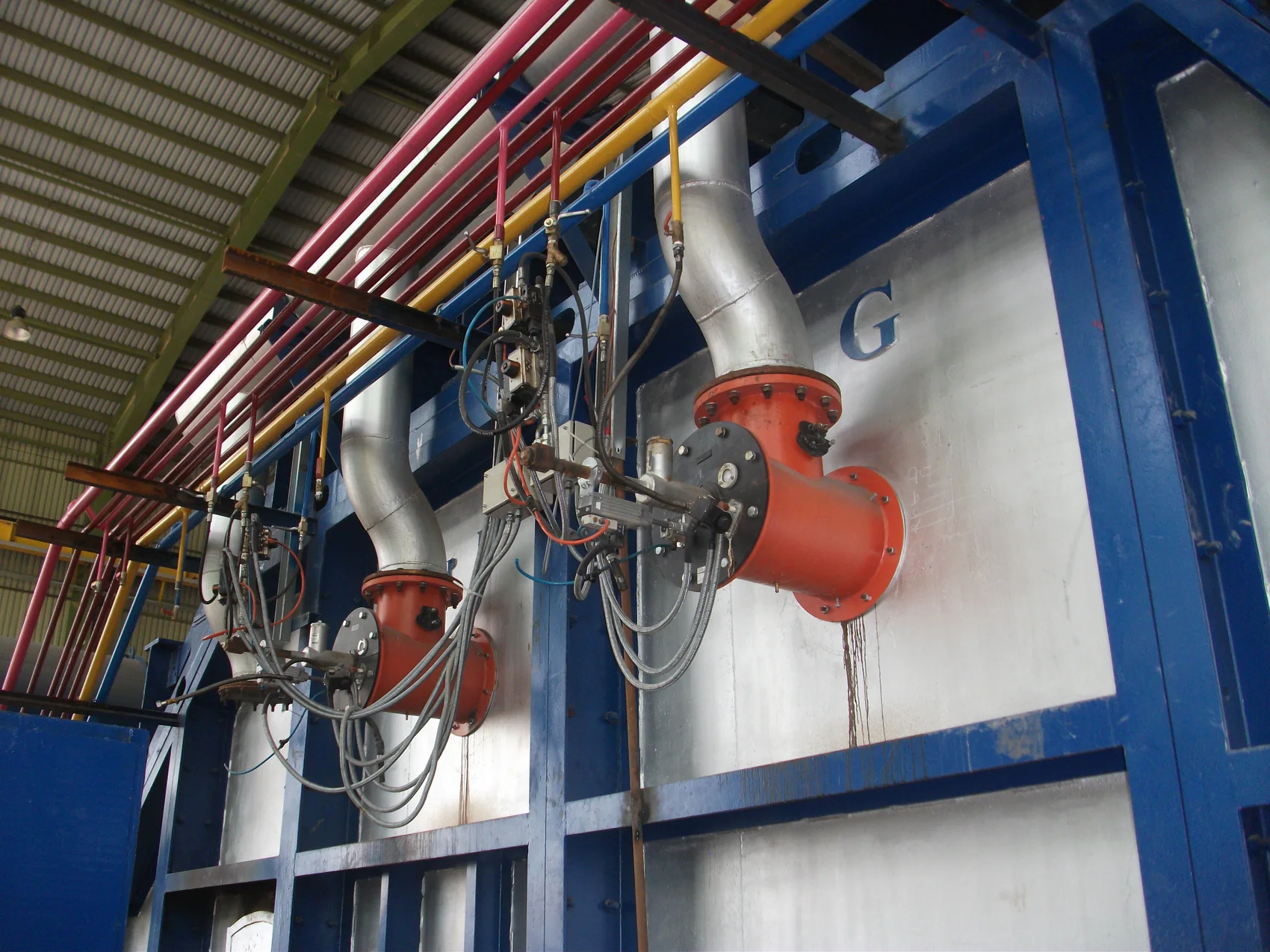
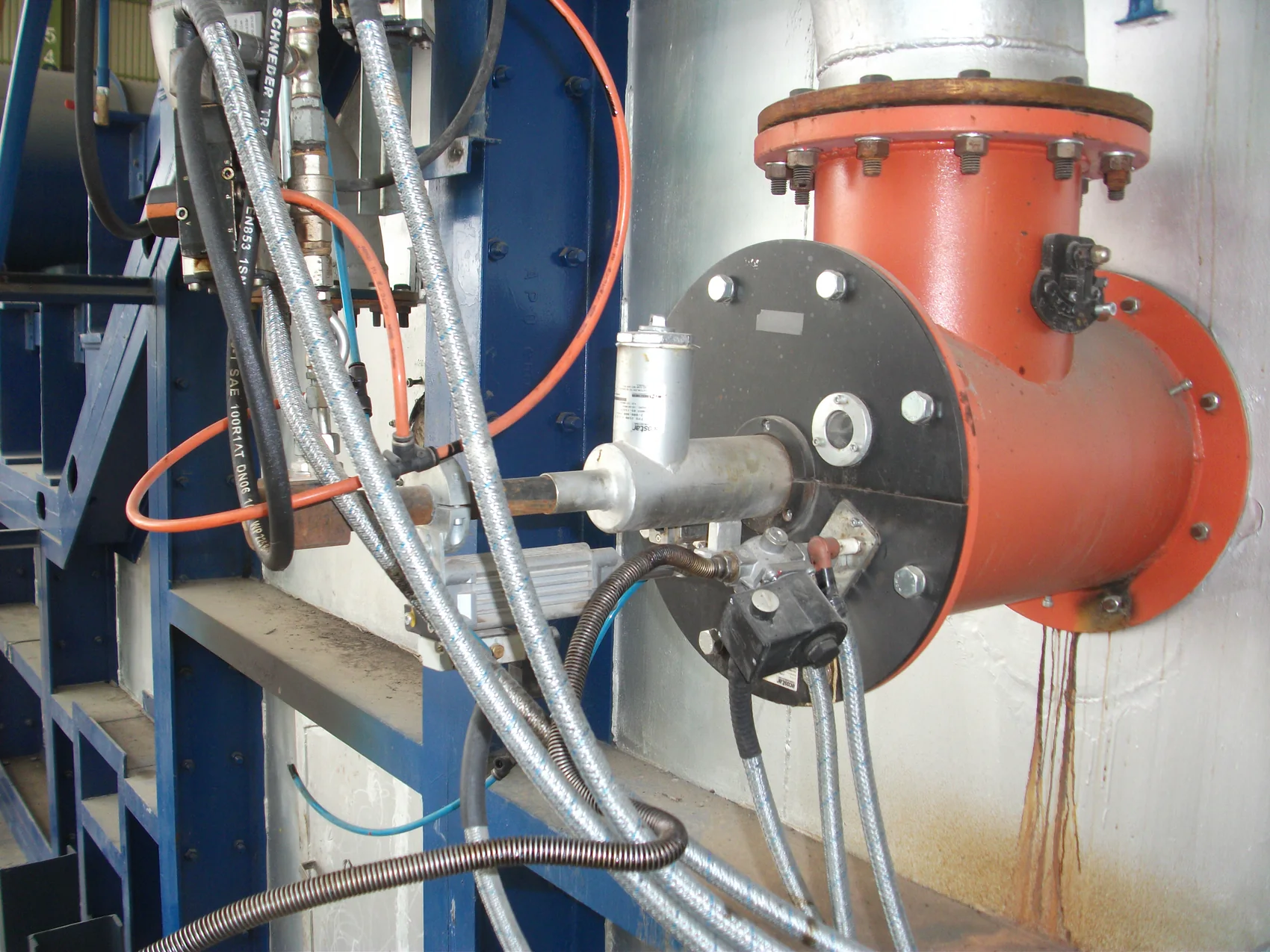
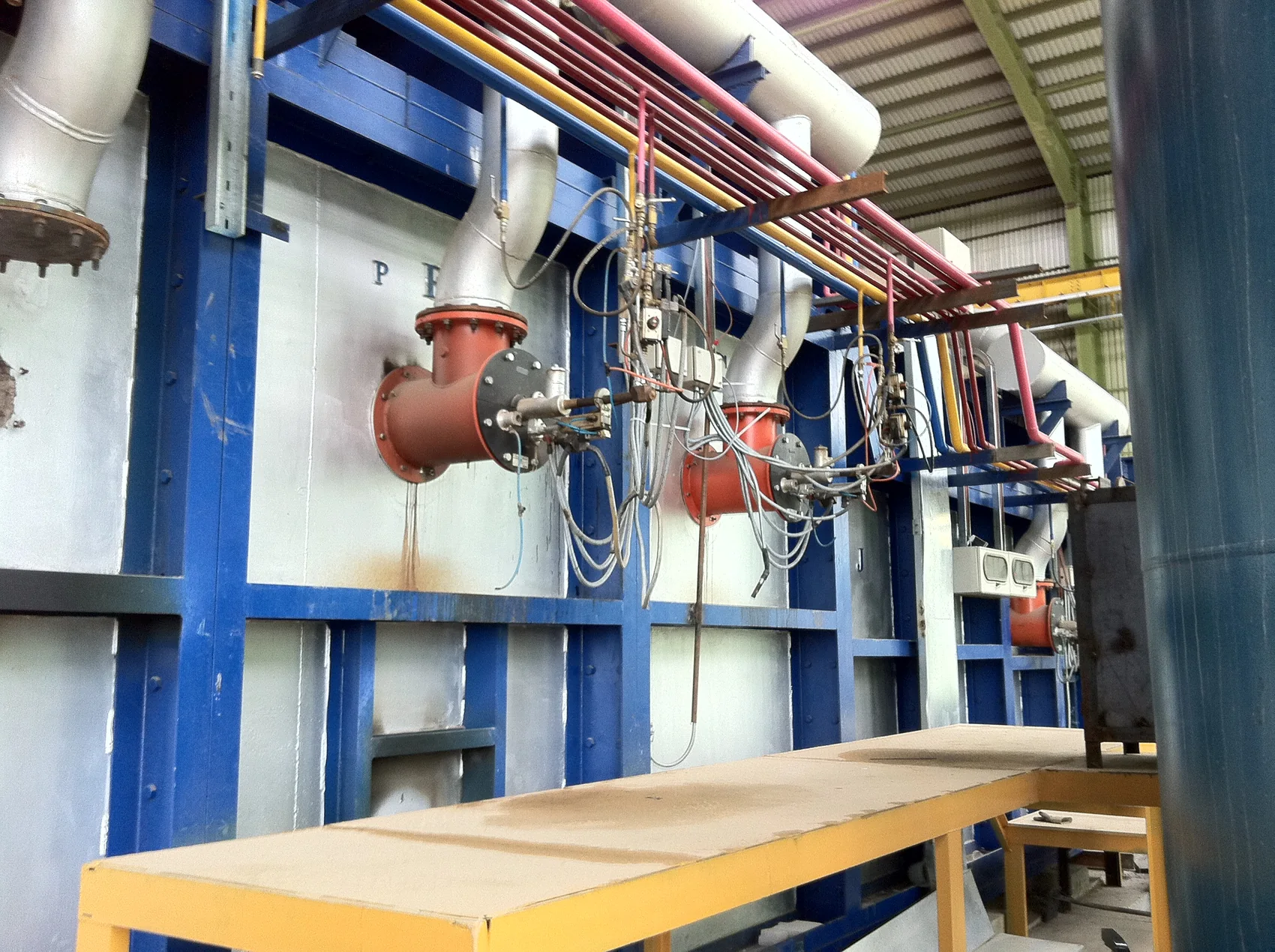
Situations that a catalogue photograph never shows: a burner connected to a gas train on a real installation, a commissioning rig with valves and controls, and a process burner running with a properly shaped flame.
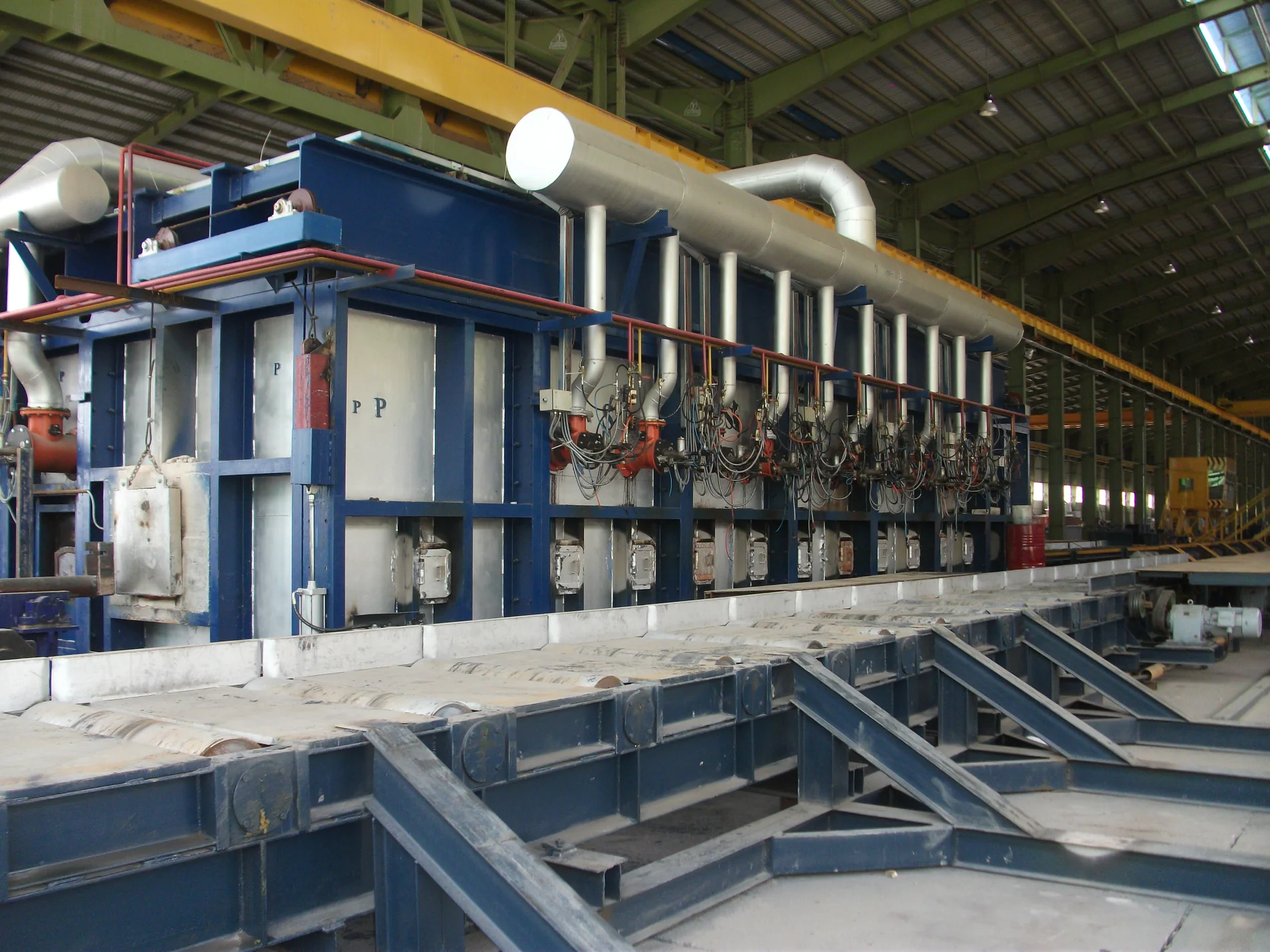
Grain dryers
This is a separate case and we treat it separately. In a dryer the burner runs at full load for many hours within a short harvest window, and grain quality depends on temperature stability — overheating degrades the crop, while too low a temperature extends drying and raises fuel cost. A breakdown mid-season means real losses, so service and commissioning of a dryer burner are best planned before the harvest, not during it.
When a burner is worth replacing or recommissioning
- Fuel consumption has risen at the same output — the most common and most measurable signal.
- Unstable process temperature or frequent shutdowns and restarts of the burner.
- Flue-gas measurements have worsened, or the installation is falling out of emission compliance.
- A change of fuel — switching to gas, adding a second fuel, using biogas or waste oil.
- No parts for the old burner, or a repair cost close to the price of a new unit.
- Upgrading the boiler without replacing it — a new modulating burner can markedly improve the efficiency of a sound boiler.
What we need in order to quote
| Information | Why it is needed |
|---|---|
| Type and capacity of the boiler or equipment | Defines the burner capacity range and the type of connection. |
| Fuel and its parameters | Fuel type, gas pressure, and for biogas the composition and calorific value. |
| The current burner | Manufacturer, model and rating plate; a photograph is often enough. |
| Duty pattern | Continuous, seasonal or process operation — this affects the control type and the scope of service. |
| Emission requirements | They determine the burner class and whether modulation is needed. |
| Photographs of the plant room | They show access, fuel routes and what has to be prepared before installation. |
Service and commissioning
- Selection and supply of a burner for an existing boiler or process unit.
- Installation and first commissioning including setting the combustion parameters.
- Recommissioning and optimisation of existing burners — adjustment alone often yields measurable fuel savings.
- Periodic inspections, including before the heating season and before the harvest for dryers.
- Repairs and parts replacement: nozzles, electrodes, photocells, fuel valves, automation components.
- Warranty and post-warranty service, also for equipment supplied by other companies.
Response time in a breakdown
We attend breakdowns without delay — emergency calls are treated as a priority, because with an industrial burner they almost always mean an installation standing still or an interrupted production process.
If you need a guaranteed response time, we put it in a service contract. A specific contractual deadline then applies — we recommend this to plants where downtime cannot be moved to another day, and to farms with a dryer working through the harvest.
Frequently asked questions
Where do your EcoStar burners come from?
We have worked with the EcoStar brand for thirteen years and it is the one we propose first. We supply equipment from across the manufacturer's catalogue — from monobloc boiler burners through process and high-velocity burners to waste-oil units — together with selection, commissioning and service. We also run the offer at palniki-ecostar.pl.
Can the burner alone be replaced, without changing the boiler?
In most cases yes, and it is very often the most cost-effective upgrade. The conditions are a sound boiler and a match of capacity range and connection. We verify this from rating plates and photographs, usually without a site visit at the first stage.
How quickly do you attend a breakdown?
Without delay — burner failures are treated as a priority, because they usually mean a stopped installation or an interrupted process. If you need a guaranteed response time we put it in a service contract, and a specific contractual deadline then applies.
Do you handle burners outside the Silesian region?
Yes. Heating and air-conditioning installations are carried out mainly in Silesia, while for industrial and process burners we work throughout Poland.
Do you help with a change of fuel to biogas or waste oil?
Yes — we match the burner to the real fuel parameters and set out what has to be prepared in the installation, for example filtration, preheating and pressure stabilisation. With waste oil the formal side of using such fuel also matters, and we clarify that before quoting.
How much can be saved by recommissioning a burner?
It depends on the starting point: on a burner that has not been adjusted for years the change can be large, on a well-maintained one small. That is why we start by measuring flue-gas parameters and only then say whether adjustment is enough or replacement is needed.
Send a photo of the rating plate — we will tell you what can be done.
Burner selection, an upgrade quote or an inspection date. No obligation.